
New York is preparing to expand its artificial intelligence regulations even before the state’s first major AI safety law takes effect, with Gov. Kathy Hochul and Democratic lawmakers discussing additional safeguards for AI systems, data centers and emerging technologies. The debate has implications for NYC elections, City Council campaigns and candidates considering how local and state government should respond to rapidly developing technology.
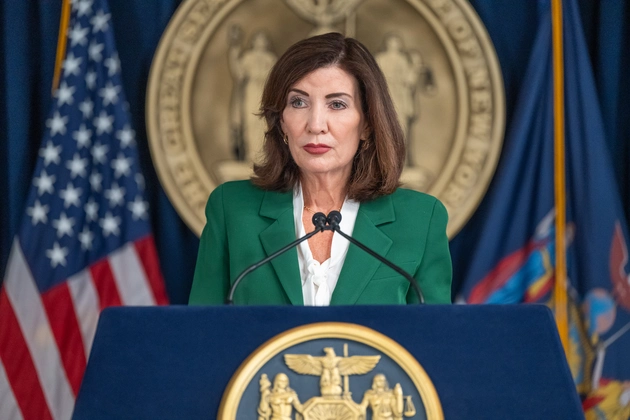
According to a report by POLITICO, Hochul said New York has an obligation to address potential risks from technological development while federal action remains limited. She pointed to the state’s Responsible AI Safety and Education Act, known as the RAISE Act, and a statewide data-center moratorium as examples of New York’s current approach. The RAISE Act is scheduled to take effect January 1, 2027.
What Is New York Doing on AI Regulation?
New York has already adopted legislation focused on AI safety and transparency.
The RAISE Act requires certain large developers of frontier AI models to establish and disclose safety protocols and report specified incidents. It also created an oversight function within the New York Department of Financial Services.
The law is scheduled to take effect in January 2027, meaning its implementation has not yet begun.
At the same time, Hochul has indicated that the state may consider additional actions.
The governor has also taken action on the infrastructure supporting AI development. In July, she signed an executive order establishing a one-year statewide moratorium on new hyperscale data centers while New York develops a regulatory framework for these facilities.
Hochul Signals More State-Level Action
Hochul has said New York could pursue additional measures at the state level.
The governor’s comments come as lawmakers in Albany are already discussing additional AI proposals for the next legislative session.
Among the issues under discussion are AI safety, transparency, accountability, chatbot protections for minors and the risks associated with increasingly powerful AI systems.
Hochul also has AI-related legislation on her desk, including a measure addressing chatbot use by minors, according to POLITICO.
The governor previously negotiated changes to the RAISE Act before signing it, including changes intended to make the legislation more workable for the technology industry and more closely aligned with California’s approach.
Lawmakers Debate a Broader AI Framework
State Sen. Kristen Gonzalez, chair of the Senate Internet and Technology Committee, has advocated for a broader rights-based approach to AI regulation.
Gonzalez has emphasized liability, transparency and accountability for technology companies as components of a regulatory framework.
Her position reflects a broader debate over whether governments should regulate individual AI applications or establish rules that apply more broadly to the development and deployment of advanced AI systems.
Another issue is the pace of technological development itself.
Democratic Assembly candidate Brian Romero has raised the possibility of a state-level restriction on “superintelligence,” drawing a distinction between regulating specific applications and addressing more advanced AI development.
For candidates, this distinction matters because AI policy can involve very different regulatory questions depending on whether the focus is on consumer products, chatbots, data privacy, AI models or infrastructure.
Data Centers Become Part of the AI Debate
New York’s AI policy discussion extends beyond software and AI models.
Large-scale AI systems require significant computing infrastructure, including hyperscale data centers.
Hochul’s July executive order created a one-year pause on new hyperscale data centers while the state develops a regulatory framework. The governor’s office said the policy was intended to protect ratepayers, the environment and communities while addressing infrastructure costs associated with new facilities.
The state subsequently developed a community investment framework intended to give local governments greater leverage when negotiating with data-center developers.
The framework recommends that communities seek at least $1 million per megawatt in community investments from developers and advises local governments to carefully consider the use of nondisclosure agreements.
Some lawmakers have argued for stronger statutory requirements rather than relying on nonbinding guidance.
What Is the NYC Connection?
AI regulation is not solely a state issue.
New York City is also developing policies concerning how AI affects residents and public services.
In September, Mayor Zohran Mamdani announced a one-year moratorium on student-facing generative AI for students from 2-K through eighth grade in NYC public schools. The city also introduced limited AI pilots for some high school classrooms and AI literacy modules for students.
The city’s policy also requires technology tools used in NYC public schools to undergo additional review, including assessments of safety, transparency, ethics and instructional impact.
Mamdani has separately expressed support for stronger federal action on AI and has discussed policies concerning the pace of frontier AI development and data centers.
This creates an increasingly multi-level policy environment involving federal, state and city governments.
Why AI Regulation Matters for NYC Candidates
The expanding AI debate provides several practical lessons for people considering running for office in NYC.
Understand Which Government Controls the Issue
AI policy can involve all three levels of government.
Federal authorities can regulate areas within federal jurisdiction. New York State can establish statewide laws and regulations. City government can address issues within municipal authority, including certain city services, procurement, education administration and local development.
A City Council candidate should therefore distinguish between a policy goal and the government’s actual legal authority to implement it.
Turn Technology Issues Into Specific Policies
“AI regulation” is too broad to function as a complete campaign position.
A candidate might instead focus on:
- AI use in city agencies
- Consumer privacy
- Automated decision-making
- Government procurement of AI systems
- AI use in schools
- Transparency requirements
- Data-center development
- Worker impacts
- Digital access
- Public-sector accountability
Breaking a broad issue into specific policies can make campaign messaging easier for voters to understand.
Use District Strategy to Identify Local Concerns
AI will not necessarily be the same issue across every NYC district.
A campaign can use voter data, neighborhood research, community meetings and constituent conversations to determine which technology-related concerns have practical relevance to local voters.
For example, one district may be more concerned about employment and automation, while another may focus on schools, privacy or infrastructure.
District strategy should therefore connect a policy proposal to an identifiable local concern.
AI Policy and Campaign Messaging
The debate also demonstrates why candidates need to distinguish between established facts, policy proposals and predictions.
For example, the RAISE Act has specific requirements that can be explained directly. The potential long-term effects of AI regulation are more uncertain and should be presented as competing arguments or scenarios rather than established outcomes.
This distinction is especially important for first-time candidates.
Campaign messaging can explain:
- What the existing law does.
- What additional policy the candidate supports.
- Which government has authority.
- What problem the proposal is intended to address.
- What evidence supports the proposal.
- What limitations or trade-offs remain.
That approach can help voters understand a complicated technology issue without reducing it to a slogan.
Campaign Finance and Technology Policy
AI regulation can also intersect with campaign finance and political communications.
Candidates increasingly use digital platforms for fundraising, advertising, voter outreach and campaign operations. As AI tools become more common, campaigns may need to consider how those tools are used and what legal or ethical requirements apply.
However, the policy debate over regulating AI companies is separate from the campaign finance rules governing political committees.
For anyone preparing to run for office, understanding campaign finance requirements remains essential regardless of the technology used to communicate with voters.
Ballot Access Still Comes First
Emerging policy issues should not distract first-time candidates from the basic requirements of running for office.
Before developing an AI-focused campaign platform, a prospective NYC candidate should understand:
- Eligibility requirements
- Ballot access
- Petition requirements
- Filing deadlines
- Campaign committee registration
- Campaign finance rules
- Matching-fund requirements
- Voter data
- District demographics
- Local government authority
AI policy may become part of a candidate’s platform, but it does not replace the administrative and legal foundations required to run a campaign.
AI Regulation and Local Government
The data-center debate illustrates another important issue for NYC candidates: infrastructure policy can become technology policy.
AI development requires physical infrastructure, electricity, land and telecommunications capacity. Decisions about where large facilities are built can therefore affect local communities even when the technology itself is developed elsewhere.
For local candidates, this means technology policy may overlap with:
- Land use
- Energy
- Infrastructure
- Economic development
- Environmental policy
- Public utilities
- Community investment
Understanding these connections can help candidates develop more complete district strategies.
What Happens Next?
The RAISE Act is scheduled to take effect on January 1, 2027, while New York lawmakers are already discussing additional AI-related proposals.
The state’s data-center moratorium and community investment framework are also part of the broader regulatory debate. Hochul’s July executive order established a one-year pause on new hyperscale data centers while the state develops its framework.
Meanwhile, New York City is developing its own approach to AI, including policies governing AI use in public schools and discussions about the broader implications of frontier AI.
For people considering running for office in NYC, the developing debate shows why candidates need to understand both policy substance and governmental jurisdiction. AI regulation can involve legislation, executive action, infrastructure planning, campaign messaging and voter concerns at multiple levels of government.
As technology develops, candidates will increasingly need to explain not only what they want government to do, but also which level of government can actually do it.
Related Reading
NYC Grocery Lawsuit Challenges Mamdani’s Store Plan
NYC Expands Free Lead Pipe Replacement Program
FAQs
The RAISE Act is scheduled to take effect on January 1, 2027, establishing transparency and safety-reporting requirements for covered frontier AI developers.
In July 2026, Gov. Kathy Hochul established a one-year moratorium on new hyperscale data centers while New York develops a regulatory framework for these facilities.