
Republican New York gubernatorial candidate Bruce Blakeman is seeking support beyond his party as he campaigns against Democratic Gov. Kathy Hochul.
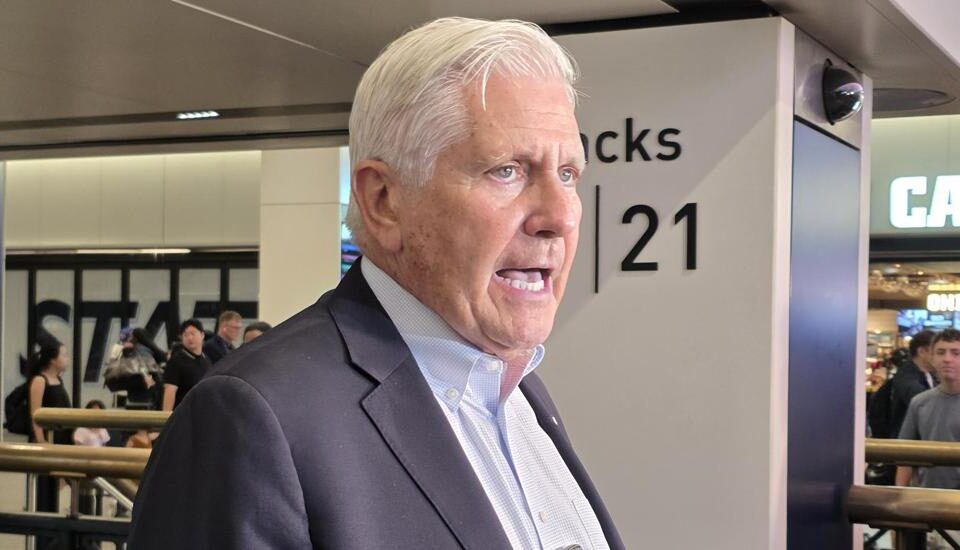
On September 23, Blakeman appeared in Middle Village, Queens, alongside former Democratic City Councilman Bob Holden. Holden publicly backed his campaign.
According to a report by NY1, Blakeman presented himself as a Republican who could attract Democratic voters by focusing on utility costs and local concerns.
What Happened?
Blakeman said voters across party lines are concerned about utility bills. He also described himself as a “pro-choice Republican” and said he has disagreed with members of his own party.
Holden endorsed Blakeman and said he wants to turn opposition to Hochul into support for the Republican candidate. He also raised concerns about the proposed Interborough Express and related housing development in parts of Queens.
Hochul’s campaign disputed the significance of the endorsement. Spokesman Ryan Radulovacki noted that Holden is a registered Democrat who has previously run on the Republican ballot line.
Utility Costs
Blakeman is also focusing on state-level affordability issues.
He claimed New York utility bills are 70% above the national average and attributed 48 approved rate increases to Hochul. These figures were presented as part of his campaign argument.
According to Independent Voter Project data cited by NY1, registered Democrats outnumber registered Republicans statewide. Outreach beyond the Republican base is therefore a visible part of the governor’s race.
Voter Outreach
The Blakeman-Holden appearance shows how campaigns can focus on issues that cross traditional party lines.
For NYC candidates, party affiliation is only one part of voter outreach. Candidates also need to understand which issues matter to the communities they want to represent.
Geography can also shape campaign messaging. Holden’s comments about the Interborough Express show how city or state policies can become important in specific neighborhoods.
Candidates can use district-level data and conversations with residents to identify which issues deserve more attention.
Campaigns should also separate documented facts from candidate claims. Blakeman’s statements about utility costs and rate increases are campaign claims and should be presented as such.
Lessons for NYC Candidates
Candidates preparing to run for office in NYC can take several practical lessons from the campaign.
Local concerns can influence voter outreach even when an issue is controlled at the state level. Understanding district demographics and neighborhood priorities can help campaigns develop more specific messages.
Candidates should also understand the responsibilities of the office they are seeking and clearly distinguish campaign positions from independently established facts.
What Happens Next?
Blakeman continues seeking support beyond the Republican base, while Hochul’s campaign is emphasizing his relationship with President Donald Trump and broader national issues.
The race continues to bring together state policies, local concerns, and party identity.
Why It Matters
Candidates often need to reach voters with different political backgrounds and priorities.
Understanding who lives in a district, which issues affect different neighborhoods, and what an elected office can control can help campaigns communicate more clearly.
Related Reading
Hochul Secures Firefighter Unions’ Endorsements
NYC Energy Rebate Checks Head to 8.2 Million New Yorkers
Blakeman is presenting himself as a Republican who can attract voters across party lines, focusing on issues including utility costs and local concerns.
Candidates can distinguish party identity from voter concerns and use district-level issues, voter data and community outreach to develop more precise campaign messages.