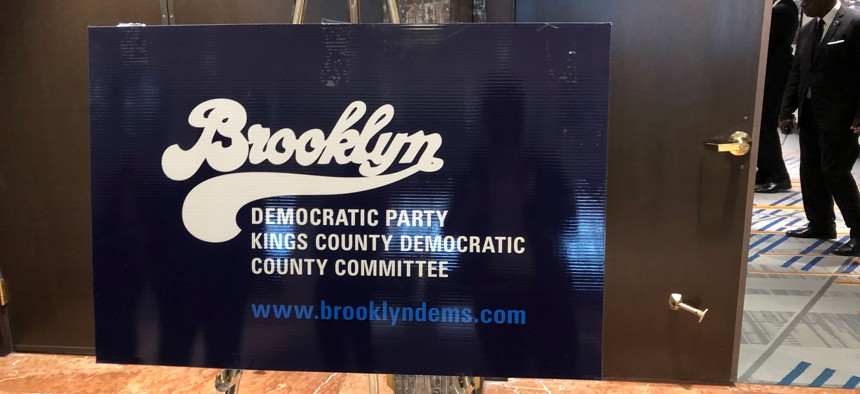

A Brooklyn judge has temporarily blocked a scheduled vote to choose the next leader of the Brooklyn Democratic Party. The ruling delays a decision that could shape the party’s leadership. It came on September 29, 2026, after reform-aligned district leaders sought to stop an executive committee meeting.
According to a report by City & State New York, Judge Jill Epstein granted the reform faction’s request for a temporary restraining order. The decision prevented the executive committee from meeting Tuesday night as planned.
Court Ruling Puts Brooklyn Leadership Vote on Hold
The court order came shortly after an appellate panel confirmed a lower court decision that invalidated controversial rule changes backed by outgoing party chair Rodneyse Bichotte Hermelyn. Reform-oriented district leaders had challenged the changes.
Hermelyn announced Monday that she would not seek another term as chair. According to City & State, she had selected Assembly Member Nikki Lucas to succeed her. Lucas formally announced her bid for chair on Tuesday and called for greater unity within the party.
Reform-aligned district leaders have instead backed Julio Peña III. The coalition formed around Peña during the summer as it sought to replace Hermelyn and change how the Brooklyn Democratic Party operates.
The delayed meeting leaves the leadership contest unresolved. Hermelyn did not immediately respond to City & State’s request for comment. Howard Graubard, an attorney for the reformers, said the judge’s decision was required.
What the Dispute Shows NYC Candidates
The Brooklyn Democratic Party dispute shows why NYC candidates may need to understand political organizations beyond the public election ballot. Party committees, district leaders and internal voting procedures can shape the political environment around campaigns.
For first-time candidates, district strategy can include learning how local party organizations are structured and how leadership decisions are made. This is separate from ballot access and campaign finance requirements, but it can affect relationships with political organizations and potential campaign allies.
The case also shows why candidates should distinguish between public elections and internal party contests. A party leadership vote is not the same as an election conducted by the NYC Board of Elections, and each process can have different rules.
Understanding these structures can help candidates communicate more accurately about endorsements, party organizations and local political relationships while developing a campaign.
The Leadership Contest Remains Unresolved
The temporary restraining order prevented the scheduled executive committee meeting from moving forward. The future of the disputed party rules also remains subject to the legal process.
For NYC candidates, the broader lesson is that local political organizations can have their own rules, leadership contests and decision-making structures. Understanding these systems can help candidates build district relationships and prepare for future campaigns.
Related Reading
Brooklyn Democratic Party Meeting Ends in Dispute
Brooklyn Judicial Candidates Face Scrutiny Over Party Donations
A Brooklyn judge granted a temporary restraining order blocking the executive committee meeting where the leadership vote was scheduled.
Assembly Member Nikki Lucas announced her bid after Rodneyse Bichotte Hermelyn backed her, while reform-aligned district leaders support Julio Peña III.