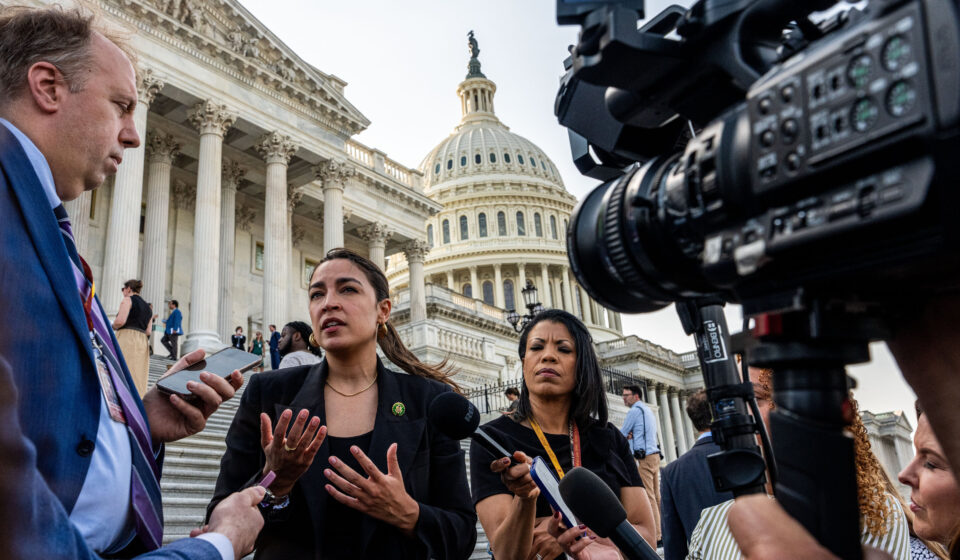

The Democratic Socialists of America (DSA) has finalized its process for considering a 2028 presidential endorsement, creating a path for the organization to potentially endorse a candidate before its next national convention. The decision comes amid continued speculation about whether Rep. Alexandria Ocasio-Cortez will seek the presidency. According to a report by City & State New York, DSA’s 27-member National Political Committee voted Sunday to keep presidential endorsement authority with the committee rather than hold a special endorsement conference.
What Happened
DSA’s National Political Committee, or NPC, decided that the organization can consider endorsing a presidential candidate early in 2027 rather than waiting for the organization’s next national convention in August 2027.
The decision follows months of internal discussion over how DSA should select a presidential candidate to support.
The question has particular significance because Ocasio-Cortez has been discussed as a potential 2028 presidential candidate, although City & State reported that she has not made a final decision about whether to run.
The NPC previously rejected the idea of conducting an online poll of DSA members about whom the organization should endorse.
How DSA’s Endorsement Process Works
DSA has two important national decision-making structures.
The National Political Committee serves as the organization’s highest decision-making body between national conventions. The biennial national convention is DSA’s highest decision-making body overall.
The next national convention is scheduled for August 2027.
Because a potential presidential campaign could begin before that convention, the question of who should control the endorsement process became an important internal issue.
The NPC ultimately voted 15-12 against holding a special presidential endorsement conference.
That decision means the NPC retains authority to consider a presidential endorsement before the 2027 convention.
Internal DSA Debate
The September vote reflected disagreements among several DSA caucuses.
Marxist Unity Group and Springs of Revolution, which together controlled seven votes on the 27-member NPC, proposed holding a special presidential endorsement conference in June.
Socialist Majority Caucus and Groundwork, which together controlled nine votes, opposed that proposal.
Bread & Roses, which controlled five votes, voted to keep presidential endorsement authority with the NPC.
The final vote was 15-12 against the proposed special conference.
The vote illustrates how internal organizational structures and caucuses can affect the timing and process of political endorsements.
What Happens If a Candidate Launches a Campaign?
Under the process described by City & State, once Ocasio-Cortez or another DSA candidate launches a presidential campaign, DSA plans to hold a candidate town hall.
Local DSA chapters would then discuss whether they support an endorsement.
The NPC is expected to consider those local discussions when deciding whether to make a national endorsement.
The process therefore includes both national decision-making and input from local chapters.
What Is Known About AOC’s Plans?
Ocasio-Cortez has not announced a final decision about whether she will run for president in 2028.
City & State reported that two people close to her campaign said she has taken steps to prepare for a possible presidential campaign while keeping her options open.
The article also reported that she could consider a U.S. Senate campaign instead.
City & State said a final decision could come after the 2026 midterm elections, when Ocasio-Cortez could assess the political environment and the performance of other progressive candidates.
Those future possibilities remain unconfirmed, and no presidential campaign has been formally announced by Ocasio-Cortez as of the report.
Why This Matters for NYC Candidates
Although the DSA decision concerns a national presidential endorsement, it provides useful lessons for people considering how to run for office in NYC.
Political organizations can influence campaigns through endorsements, volunteers, fundraising networks, voter outreach and organizational infrastructure.
Understanding how those organizations make decisions can help first-time candidates identify where political support may come from and how early campaign relationships are developed.
Endorsements Are Organizational Decisions
An endorsement is not simply a public statement from an individual politician.
Organizations can have formal rules governing who makes endorsements, when votes occur and what input members or local chapters receive.
For a City Council candidate, understanding the endorsement process of a political organization can help with campaign planning.
Candidates should research:
- Who has endorsement authority
- When endorsement decisions are made
- Whether members or local chapters participate
- What candidate forums or questionnaires are required
- Whether an endorsement includes volunteers or other campaign support
Local Chapters Can Matter
The DSA process specifically involves local chapters discussing whether to support a candidate.
That illustrates a broader campaign lesson: national or citywide organizations may rely on local structures to assess candidates.
For an NYC City Council campaign, local relationships can be particularly relevant because districts contain distinct neighborhoods, community organizations and political networks.
Candidates should not assume that an organization with a citywide or national presence operates identically in every district.
Campaign Messaging Should Match the Audience
The DSA debate also demonstrates the importance of understanding the audience behind an endorsement.
A candidate may seek support from an organization because its members and supporters overlap with the candidate’s target electorate.
However, an endorsement does not replace district strategy.
Candidates still need to understand voter data, turnout patterns, neighborhood concerns and the issues that matter to voters in their district.
Campaign Finance and Political Organizations
Political endorsements can also intersect with campaign finance.
Candidates should distinguish between an endorsement, direct campaign contributions, independent expenditures, political committees and volunteer activity.
For NYC candidates participating in the city’s public matching-funds program, campaign activity must comply with applicable Campaign Finance Board rules.
First-time candidates should establish campaign-finance procedures before accepting contributions or coordinating campaign activities.
Ballot Access Is Separate From Endorsements
An endorsement can provide political support, but it does not replace ballot-access requirements.
Candidates running for City Council must separately satisfy the eligibility, petitioning, filing and other election requirements applicable to their office.
A practical campaign timeline should therefore treat ballot access, fundraising, endorsements, voter outreach and messaging as separate but connected workstreams.
What First-Time NYC Candidates Can Learn
The DSA endorsement process offers several practical lessons for candidates preparing for NYC elections.
Map the Political Organizations in Your District
Candidates can identify unions, advocacy groups, neighborhood organizations, political clubs and other organizations that regularly participate in local elections.
Understanding each organization’s endorsement process can help candidates plan outreach well before endorsement deadlines.
Start Relationship-Building Before Endorsement Season
Organizations often need time to evaluate candidates.
Candidates can introduce themselves, attend community meetings, learn about organizational priorities and establish relationships before formally requesting support.
This does not guarantee an endorsement, but it can help candidates understand the political landscape surrounding their race.
Prepare for Questionnaires and Candidate Forums
Organizations may ask candidates to complete questionnaires or participate in interviews and forums.
A campaign should maintain consistent policy information so that the candidate can answer questions accurately and explain how proposed policies would affect the district.
Use Voter Data Alongside Political Networks
Political organizations can provide valuable networks, but candidates should not rely solely on endorsements.
Campaigns can combine organizational outreach with voter data, field operations, canvassing and direct voter conversations.
That approach allows candidates to distinguish between organizational support and actual voter engagement.
What Happens Next
DSA’s endorsement process now allows the National Political Committee to consider a presidential endorsement before the August 2027 national convention.
If Ocasio-Cortez or another DSA candidate launches a presidential campaign, DSA plans to hold a candidate town hall and involve local chapters in discussions before the NPC considers an endorsement.
Ocasio-Cortez’s own decision about whether to seek the presidency or another office remains unresolved.
For NYC candidates, the broader lesson is that political organizations have their own governance structures, endorsement rules and decision-making timelines. Understanding those structures can be useful when planning a campaign, but endorsements remain only one component of a broader strategy involving ballot access, campaign finance, voter data, district strategy and direct voter engagement.
Related Reading
NY-21 Race: Blake Gendebien Targets Stefanik Seat
Blakeman Poll Shows Narrower New York Governor Race
FAQs
Under the process finalized by its National Political Committee, DSA can consider an endorsement before its August 2027 national convention.
No. City & State reported that Ocasio-Cortez had not made a final decision and was keeping open the possibility of a presidential campaign or a U.S. Senate run.



[…] DSA Finalizes 2028 Presidential Endorsement Process […]
[…] DSA Finalizes 2028 Presidential Endorsement Process […]