
New NYC primary voter turnout figures show that participation in the 2026 primary elections remained significantly lower than the previous year, despite several closely watched congressional contests and high-profile political endorsements. According to a report by NBC New York, election experts say a combination of voter motivation, election timing, and limited public attention continues to suppress turnout across New York City.
The trend highlights an ongoing challenge for candidates, campaign organizations, and civic groups seeking to engage voters in NYC elections, particularly during primary contests that often determine the eventual officeholder in heavily Democratic districts.
What Happened in the 2026 NYC Primary Election?
By 3 p.m. on June 23, more than 330,000 New York City voters had cast ballots in this year’s primary election. That represented a sharp decline from more than 710,000 voters by the same point during the 2025 primary cycle, according to reporting cited by NBC New York and Politico.
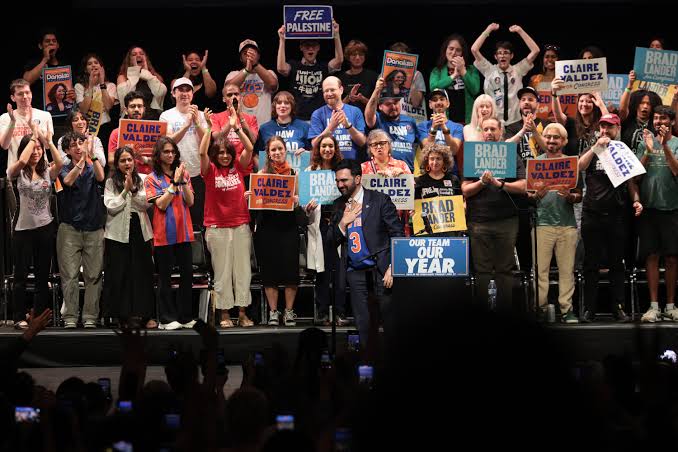
The lower participation came even though several congressional primaries attracted considerable political attention, including races involving candidates endorsed by Mayor Zohran Mamdani.
While some Mamdani-backed candidates secured important victories, overall turnout continued the decades-long pattern of relatively low participation in New York primary elections.
Why Does NYC Primary Voter Turnout Stay Low?
Political scientists say there is no single explanation.
Joshua Tucker, a professor of political science at New York University, explained that voting requires time and effort, meaning participation often depends on whether voters believe the election is worth their investment.
Several factors make primary elections less attractive to many voters:
- Primary elections determine a party’s nominee rather than deciding the final winner.
- Candidates from the same political party often have similar policy positions.
- Researching differences between candidates requires additional effort.
- Many voters perceive their individual vote as less likely to affect the outcome.
Andrew Gelman, a political science professor at Columbia University, also pointed to several structural issues affecting turnout:
- Primary election dates change depending on the election cycle.
- Primary contests receive significantly less media coverage than general elections.
- Public awareness campaigns often fail to reach infrequent voters.
- Many voters are unfamiliar with local races or district-level offices.
Early voting reflected the same trend. The New York City Board of Elections reported that approximately 172,743 voters participated during the nine-day early voting period before Election Day.
Competitive Races Do Not Always Produce Higher Turnout
Mayor Zohran Mamdani acknowledged that turnout typically depends on the office being contested.
Mayoral elections generally generate more public interest than congressional or legislative primaries because voters perceive citywide executive offices as having broader influence over daily life.
Although campaign activity increased in the days leading up to the election, overall participation remained substantially below the levels seen during the highly competitive 2025 mayoral primary.
Why This Matters for People Running for Office in NYC
Low NYC primary voter turnout significantly changes campaign strategy.
When fewer voters participate, campaigns often rely less on broad public advertising and more on precise voter outreach. Candidates who successfully identify and mobilize reliable primary voters can outperform better-funded opponents.
For first-time candidates, this makes several campaign fundamentals especially important:
- Building a high-quality voter database.
- Developing strong district-level outreach.
- Maintaining consistent voter contact before early voting begins.
- Educating voters about the importance of primary elections.
- Investing in neighborhood organizing and volunteer engagement.
Candidates should also recognize that many primary voters make decisions based on direct communication, local endorsements, and community engagement rather than large-scale media campaigns.
Those preparing to run in future elections can also review June 2026 Primary Election NYC Guide for an overview of New York’s primary process and election timeline.
Campaigns interested in improving voter outreach may also benefit from AI Political Campaigns for NYC Primaries, which explores how data, technology, and voter targeting can strengthen modern campaign operations.
Campaign Strategy Lessons from Low Turnout
Low-turnout elections reward preparation.
Rather than attempting to persuade every registered voter, successful campaigns typically focus on identifying likely participants, encouraging early voting, and maintaining consistent communication throughout the election cycle.
Campaign teams should also anticipate that future NYC elections may continue to experience uneven participation unless broader civic engagement improves.
Understanding turnout patterns can help candidates allocate resources more effectively, prioritize voter contact, and develop district-specific strategies that maximize every campaign dollar.
Conclusion
The 2026 primary election reinforces a long-standing reality of NYC primary voter turnout: competitive races alone do not guarantee high participation.
For candidates considering a run for office, turnout data is more than an election statistic—it shapes campaign strategy, voter outreach, fundraising priorities, and field operations. As future NYC elections approach, campaigns that understand voter behavior and invest in targeted engagement will likely be better positioned to compete in low-turnout environments.
Primary elections typically receive less media coverage, involve candidates from the same party, and are often viewed by voters as less consequential than general elections.
Low turnout increases the importance of targeted voter outreach, district strategy, volunteer mobilization, and effective campaign organization because a relatively small number of votes can determine the outcome