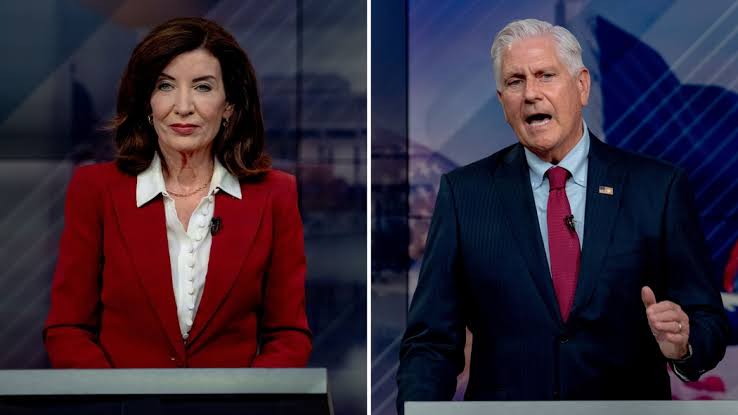

New York Gov. Kathy Hochul and Republican challenger Bruce Blakeman are making rising utility bills a central issue ahead of the November 3, 2026, election. According to Spectrum News NY1, the candidates disagree over whether state energy policies or broader factors are driving higher costs.
Blakeman Blames Hochul’s Energy Policies
Blakeman criticized Hochul during an October 20 campaign appearance in Washington Heights, arguing that her policies have increased electricity costs for households and businesses.
He described a diner owner who showed him a $16,000 electric bill. Blakeman argued that taxes and delivery charges contribute significantly to the burden on businesses.
Former New York Gov. George Pataki joined Blakeman at the appearance, criticizing the state’s record on taxes and electricity costs.
Hochul Points to Trump and the Iran War
Hochul rejected Blakeman’s criticism, acknowledging that energy prices are high but arguing that international factors are contributing to the problem. She specifically pointed to the war with Iran and challenged Blakeman to hold President Donald Trump accountable.
The governor has also defended her energy strategy, which includes renewable energy development. Her administration previously amended some of the state’s strict renewable energy requirements following concerns about the potential impact on household bills.
Energy Costs Become a Key Election Issue
The dispute reflects a wider debate over how New York should balance affordable electricity with its climate goals. Blakeman supports expanding natural gas production and reversing parts of the state’s clean energy policies.
Hochul has defended investment in renewable energy while acknowledging affordability concerns. The candidates’ competing proposals give voters different approaches to addressing utility costs and future energy demand.
What Rising Energy Bills Mean for New Yorkers
Higher utility bills affect households, small businesses, and organizations across New York. The debate also raises questions about the costs of energy infrastructure, taxes, delivery charges, and the state’s transition to cleaner power sources.
For voters, comparing the candidates’ specific proposals and examining the evidence behind their claims can help clarify how each approach might affect household budgets.
What NYC Candidates Can Learn From This Debate
Candidates running for NYC office can learn how to connect statewide policy debates with residents’ everyday concerns. Utility costs can be a local campaign issue because they affect household budgets and business operating expenses.
Candidates should explain their proposed solutions clearly and distinguish verified data from campaign claims. Specific, evidence-based messages can help voters understand what a candidate would change and why.
Related Reading
Nikki Lucas Faces Lawsuit Over Campaign Debt
Mamdani and City Council Speaker Agree to Ban NYC Horse Carriages
Blakeman blames Hochul’s energy policies for rising utility bills, while Hochul points to broader factors, including the war with Iran.
Blakeman supports expanding natural gas production and reversing parts of New York’s clean energy policies.