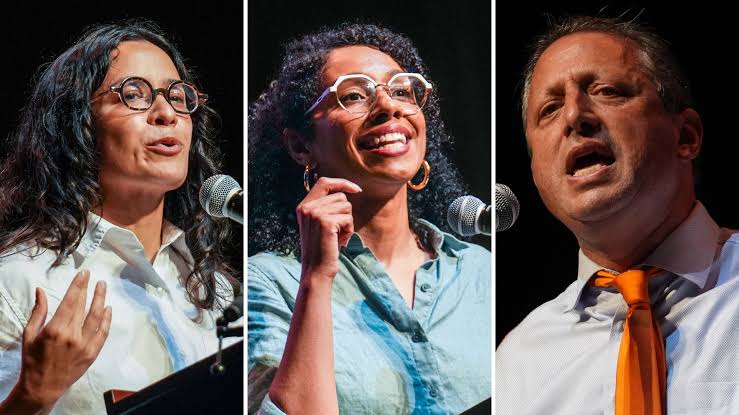

New York City’s 2026 Democratic primary elections produced a mix of incumbent victories and high-profile upsets, with several longtime officeholders successfully defending their seats while a handful of challengers reshaped the political landscape. According to a report by Norwood News, more than half a million New Yorkers participated in statewide and local primaries, with Bronx incumbents largely maintaining their positions despite competitive challenges.
The unofficial results illustrate how incumbency, grassroots organizing, and voter turnout continue to influence NYC elections while demonstrating that competitive primaries remain an important feature of New York politics.
What Happened in the 2026 NYC Primaries?
More than 522,000 Democratic voters participated in the statewide Democratic primary, according to figures cited from the New York City Board of Elections.
In the Bronx:
- Representative Ritchie Torres won renomination in New York’s 15th Congressional District, defeating former Representative Michael Blake.
- Assembly Member Jeffrey Dinowitz retained his Assembly District 81 seat after defeating challenger Morgan Evers.
- State Senator Robert Jackson won reelection in Senate District 31.
- Several district leader, county committee, and state committee incumbents also secured another term.
While many incumbents prevailed, one of the night’s most significant developments occurred outside the Bronx when Darializa Avila Chevalier defeated longtime Representative Adriano Espaillat in New York’s 13th Congressional District.
Bronx Incumbents Hold Their Ground
Representative Ritchie Torres earned more than 70% of the vote, according to unofficial election night results.
Following the election, Torres emphasized unity across the Bronx, describing the borough as a diverse community representing multiple cultures, religions, and backgrounds.
Assembly Member Jeffrey Dinowitz also successfully defended his seat against Morgan Evers, who ran a grassroots campaign supported by public matching funds and local volunteers.
Although unsuccessful, Evers highlighted the campaign’s extensive voter outreach, including tens of thousands of door knocks and thousands of phone calls.
The results demonstrate that incumbent officeholders often retain advantages through established voter relationships, name recognition, and community engagement.
Competitive Primaries Still Produced Major Changes
While incumbents held many Bronx seats, several races elsewhere in New York City reflected shifting political dynamics.
The Democratic primary in New York’s 13th Congressional District drew statewide attention after challenger Darializa Avila Chevalier defeated longtime Representative Adriano Espaillat.
Representative Alexandria Ocasio-Cortez also won renomination in New York’s 14th Congressional District with approximately 87% of the vote, while congratulating several newly nominated Democratic candidates across New York.
These results show that although incumbency remains a powerful advantage, competitive primaries continue to create opportunities for new candidates under the right political conditions.
Grassroots Campaigns Continued to Play an Important Role
Several candidates who did not win nevertheless emphasized the importance of grassroots organizing.
Morgan Evers credited her campaign’s volunteer network, local fundraising, and voter outreach efforts, while district leader candidate Izaiah Zeek Barrow highlighted community engagement despite falling short of victory.
Their campaigns illustrate that even unsuccessful races can strengthen future political networks, increase community visibility, and prepare candidates for future elections.
Why This Matters for NYC Candidates
The unofficial primary results offer several practical lessons for anyone planning to run for office in New York City.
Incumbents Still Hold Significant Advantages
Officeholders often benefit from established constituent relationships, previous campaign infrastructure, and greater public recognition. Challengers should prepare long-term strategies to build comparable community support.
Grassroots Organizing Remains Essential
Door-to-door outreach, volunteer recruitment, local fundraising, and direct voter engagement remain among the most effective campaign tools, particularly in competitive district races.
Every District Has Unique Political Dynamics
The results varied considerably between congressional, state legislative, and local contests. Candidates should develop district-specific messaging based on neighborhood priorities rather than relying on citywide political trends.
To better understand the broader primary landscape, read June 2026 NYC Primary Election Guide.
You can also explore how progressive coalitions influenced several congressional contests in How Mamdani Is Influencing NYC Congressional Primaries.
What Happens Next?
Because these results are unofficial, certified vote totals will be finalized after all eligible absentee, affidavit, and mail ballots are counted by the New York City Board of Elections.
The winning nominees will now advance toward the general election, while unsuccessful candidates begin evaluating future campaigns and continuing community engagement.
For future candidates, the 2026 primaries reinforce an enduring lesson of NYC elections: strong grassroots organizing, consistent voter outreach, and a deep understanding of district priorities remain essential regardless of whether a candidate is an incumbent or challenger.
Unofficial results show Representative Ritchie Torres, Assembly Member Jeffrey Dinowitz, State Senator Robert Jackson, and several local party officials successfully retained their seats.
The elections highlight the importance of grassroots organizing, district-specific campaign strategy, voter outreach, and understanding the advantages incumbents often possess.