
New developments surrounding NYC open primaries and redistricting could significantly influence future elections, ballot access, and campaign strategy across New York City. According to a report by New York Elections, Census & Redistricting Institute, multiple legal challenges, petition drives, and election reform proposals are advancing simultaneously, creating uncertainty about how New Yorkers may vote in upcoming election cycles.
For candidates planning to run in NYC elections, these developments could affect voter participation, ballot access rules, district strategy, and campaign planning well before the 2027 election cycle.
What Happened?
Several election reform efforts unfolded during the week of July 13, with the most significant developments focusing on New York City’s primary election system.
The update highlights:
- Ongoing litigation involving former Mayor Eric Adams’ Charter Revision Commission and its proposal for open primaries.
- Unite NY’s submission of more than 45,000 petition signatures seeking a 2027 ballot question on open primaries.
- Continued debate over New York’s future redistricting process.
- Election reform decisions in Buffalo and related redistricting developments across several states.
Together, these issues could reshape how voters participate in future local elections and how candidates prepare their campaigns.
Legal Fight Over the “Zombie” Charter Commission Continues
One of the week’s biggest stories centers on the Charter Revision Commission created by former Mayor Eric Adams during his final day in office.
Mayor Zohran Mamdani later dissolved the commission after receiving new authority through the state budget. In response, commission members, along with several elected officials, filed lawsuits arguing that the commission was unlawfully terminated before voters could consider its proposed open primary amendment.
The litigation now involves multiple legal questions, including:
- Whether the commission was legally dissolved.
- Whether its open primary proposal can still reach the November 2026 ballot.
- Whether required preclearance under the New York Voting Rights Act should proceed.
- Whether former First Deputy Mayor Randy Mastro may continue serving as legal counsel for the commission.
Hearings on these matters are scheduled for July 16.
Unite NY Advances Separate Open Primary Proposal
While the Adams commission pursues its proposal through the courts, Unite NY is taking a different path.
The organization submitted more than 45,000 petition signatures seeking voter approval for a ballot initiative that would establish an open primary system for New York City elections beginning in 2027.
Under the proposal:
- All registered voters could participate in June primary elections regardless of party affiliation.
- Voters would rank up to five candidates using ranked-choice voting.
- The top three candidates would advance to the November general election.
Supporters argue the proposal would allow more than 1.1 million unaffiliated New York City voters to participate in primary elections, including many younger voters and communities historically underrepresented in partisan primaries.
Mayor Mamdani has publicly opposed changing the current primary system, stating that he believes existing rules already allow broad participation.
For more background on the ongoing legal dispute, read NYC Open Primaries Lawsuit Explained.
Buffalo Rejects Similar Election Reform Proposal
Election reform advocates also experienced a setback in western New York.
The Buffalo Charter Revision Commission voted against advancing proposals that would have introduced:
- Semi-open primaries
- Ranked-choice voting
- Expanded ballot access for independent candidates
Although polling cited in the report suggested substantial voter support for these reforms, commissioners declined to move the proposals forward.
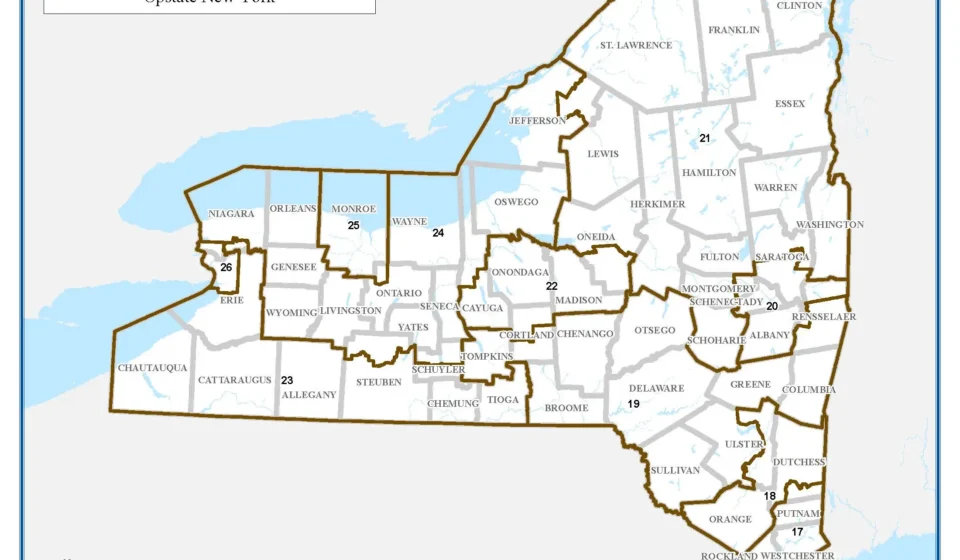
Redistricting Debate Expands Beyond New York City
The weekly update also highlights growing attention on congressional and legislative redistricting.
Political observers continue discussing whether New York should pursue constitutional changes allowing mid-decade congressional redistricting after similar efforts emerged in other states.
The report notes that New York voters could face a constitutional amendment regarding redistricting in 2027, potentially alongside a citywide vote on open primaries.
Elsewhere:
- Maryland lawmakers will meet in August to consider a constitutional amendment on congressional redistricting.
- A federal appeals court reversed an earlier Voting Rights Act decision involving North Dakota legislative districts following new Supreme Court guidance.
Although these developments occur outside New York City, they reflect a broader national conversation about election administration, district boundaries, and voting rights.
Why This Matters for NYC Candidates
Anyone preparing to run for office should closely monitor changes affecting NYC open primaries, ballot access, and election administration.
Potential reforms could influence:
- Which voters participate in primary elections.
- Campaign messaging directed toward independent voters.
- District outreach and voter targeting strategies.
- Petition planning and candidate qualification timelines.
- Resource allocation throughout the campaign.
If an open primary system is eventually adopted, candidates may need to build broader coalitions beyond traditional party voters much earlier in the campaign cycle.
Candidates should also stay informed about evolving election laws, since litigation and ballot initiatives may alter campaign requirements before future municipal elections.
To better understand how election reforms could affect future campaigns, see Albany Ranked-Choice Voting Referendum Updates.
What Happens Next?
Several key deadlines will shape the next phase of these election reform efforts.
Courts are expected to hear arguments over the Charter Revision Commission’s legal status and ballot proposal, while officials review Unite NY’s petition process and determine whether its proposed ballot question advances toward voter consideration.
Meanwhile, discussions surrounding redistricting, voting rights, and election reform are expected to continue at both the state and national levels as policymakers prepare for future election cycles.
Conclusion
The latest developments demonstrate that New York’s election rules remain in flux. From litigation over NYC open primaries to broader debates about redistricting and ballot access, these decisions could significantly influence how candidates organize campaigns and how voters participate in future elections.
For first-time candidates and experienced campaigns alike, understanding changes in election law is an essential part of building an effective campaign strategy in New York City.
The proposal would allow all registered New York City voters to participate in primary elections regardless of party affiliation using ranked-choice voting.
Changes to the primary system could reshape voter targeting, campaign messaging, ballot access planning, and district strategy for future municipal elections.