Big Money and Super PAC Spending Reshaped the Final Weeks of Adriano Espaillat’s Primary Campaign

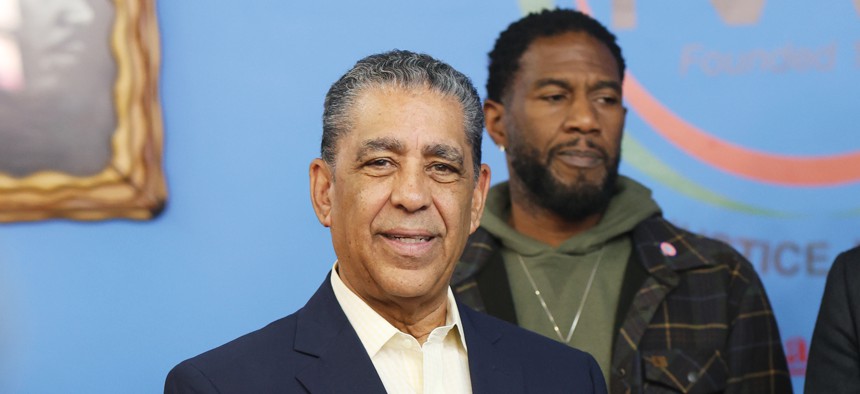
Super PAC fundraising became a major story in New York’s 2026 congressional primaries after new federal filings revealed how millions of dollars were redirected to support Rep. Adriano Espaillat during the final weeks before Election Day. According to a report by City & State New York, campaign finance disclosures showed that donors, political committees, and independent expenditure groups rapidly reorganized their spending after polling suggested Espaillat faced a stronger-than-expected challenge.
What Happened
New Federal Election Commission (FEC) filings released after the June 23 Democratic primary revealed how multiple super PACs shifted resources as the political landscape changed in the final weeks of the campaign.
Initially, the Progressive Unity Fund (PUF) planned to support Brooklyn Borough President Antonio Reynoso in his congressional race. However, campaign dynamics changed after New York City Mayor Zohran Mamdani endorsed Espaillat’s challenger, Darializa Avila Chevalier, and polling indicated the incumbent faced a competitive race.
As a result, Progressive Unity Fund redirected its efforts almost entirely toward supporting Espaillat.
To avoid using contributions originally designated for Reynoso, organizers transferred those funds to two separate committees:
- Real Fight NYC
- New York Fights – Luchando por Nueva York
The restructuring allowed each super PAC to continue supporting its intended candidate while complying with federal campaign finance rules governing independent expenditures.
Key Details
Campaign finance filings show that Progressive Unity Fund ultimately spent more than $1.8 million on advertisements supporting Espaillat and opposing Avila Chevalier.
The committee also reported raising more than $2.7 million overall.
One of its largest contributors was Next NY Inc., a nonprofit 501(c)(4) organization that donated approximately $1.45 million. Because organizations operating under this section of federal tax law generally are not required to publicly disclose their donors, the original funding sources remain unknown.
Meanwhile, Real Fight NYC disclosed receiving:
- $400,000 transferred from Progressive Unity Fund
- $300,000 from Next NY Inc.
Those filings clarified questions raised during the campaign regarding the origins of funding supporting Reynoso’s race.
Major Donors Behind the Spending
Campaign finance reports also identified several major contributors to Progressive Unity Fund.
Notable donations came from:
- Real estate executives Eric Rudin and William Rudin
- Extell Development President Gary Barnett
- Hugo Neu Corporation Chair Wendy Kelman Neu
- American Federation of Teachers’ political committee
- Investor Jeff Aronson
- Several pro-Israel donors, including entrepreneur Daniel Lubetzky
The filings also showed Progressive Unity Fund received a contribution from NORPAC, a pro-Israel political action committee, on the day of the Democratic primary.
The disclosures provide a more complete picture of how business leaders, labor organizations, advocacy groups, and political committees participated in one of New York’s most closely watched congressional primaries.
Campaign Finance Transparency and Super PACs
Unlike candidate committees, super PACs may raise unlimited amounts of money to independently support or oppose candidates, provided they do not coordinate directly with campaigns.
Federal law requires periodic disclosure of donors and expenditures, although organizations such as 501(c)(4) nonprofits can contribute to super PACs without publicly revealing their own donors.
This structure often creates additional layers between the original funding source and election spending, contributing to debates over campaign finance transparency.
Readers interested in disclosure rules can learn more through Campaign Finance Transparency and Political Consulting.
Why This Matters for NYC Candidates
Candidates running for office in New York City can draw several lessons from these campaign finance filings.
Understand Independent Spending
Even if a candidate raises modest amounts directly, outside organizations may spend substantial resources supporting or opposing campaigns.
Independent expenditures can significantly influence voter messaging during the final weeks before an election.
Build a Strong Campaign Strategy
Successful campaigns should prepare for changing political conditions, including endorsements, polling shifts, and outside spending that may rapidly alter the competitive landscape.
Developing a flexible communications plan helps campaigns respond effectively without violating campaign finance regulations.
Candidates can explore additional insights in NYC Campaign Strategy Lessons from the 2026 Primaries.
Know the Rules
Understanding the differences between candidate committees, party committees, super PACs, and nonprofit organizations is essential for anyone planning to run for office.
Candidates must also understand reporting requirements, contribution limits, and restrictions on coordination with independent expenditure committees.
Campaign Impact
The filings illustrate how quickly political organizations can redirect financial resources when an election becomes more competitive.
Polling, endorsements, and changing voter dynamics all influenced fundraising priorities during the final weeks before the Democratic primary.
Although both Espaillat and Reynoso ultimately lost their races despite substantial outside support, the disclosures demonstrate how super PACs and major donors continue to shape modern NYC elections.
What Happens Next
The post-election filings provide additional transparency into how outside money influenced the 2026 congressional primaries.
Future elections will likely continue to feature significant independent expenditures, particularly in competitive races where polling shifts rapidly or high-profile endorsements change campaign dynamics.
Campaign finance transparency will remain an important issue for candidates, voters, and regulators as new reporting deadlines reveal additional information about political spending.
Conclusion
The latest Federal Election Commission filings highlight the increasingly complex role of super PACs, nonprofit organizations, and major donors in modern political campaigns.
For individuals considering running for office in New York City, understanding how independent expenditures operate is just as important as building a traditional fundraising program. Strong campaign strategy, compliance with campaign finance laws, and transparent communication remain essential for earning voter trust in an increasingly competitive political environment.
A super PAC is an independent political committee that can raise and spend unlimited funds to support or oppose candidates, provided it does not coordinate directly with campaigns.
According to campaign finance filings, the committee shifted its focus after polling showed Rep. Adriano Espaillat faced a more competitive primary following Mayor Zohran Mamdani’s endorsement of his challenger.