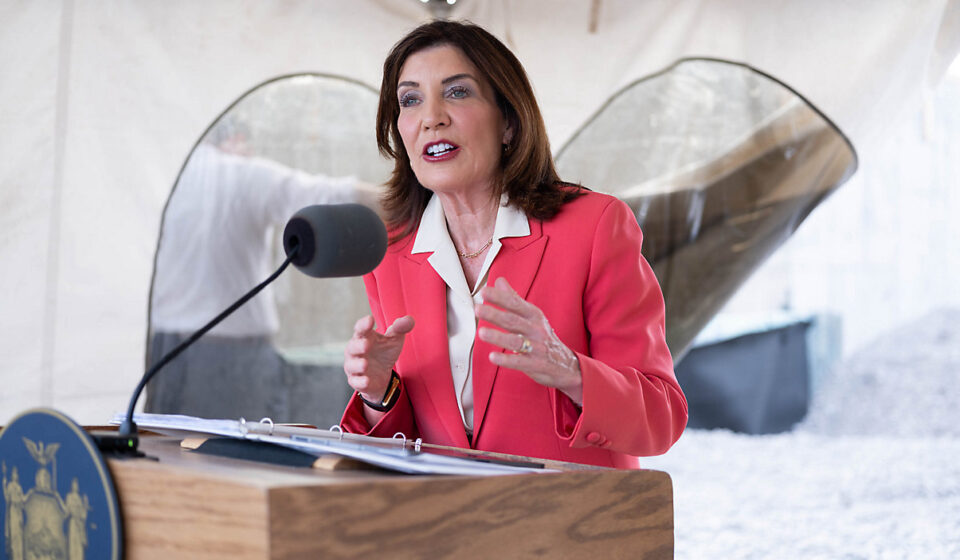

New York Gov. Kathy Hochul is highlighting a growing list of endorsements from Albany-area elected officials as the 2026 New York governor’s race becomes increasingly competitive. According to a report by Spectrum News, Hochul used a campaign event in Albany to showcase support from local leaders while contrasting her record with Republican challenger Bruce Blakeman.
What Happened
Gov. Hochul held a campaign event in Albany alongside elected officials, union representatives, and political supporters as both major-party campaigns increased activity ahead of the 2026 general election.
The event featured endorsements from nearly 100 elected officials in Albany County, including:
- Albany Mayor Dorcey Applyrs
- Albany County Executive Dan McCoy
- Numerous city and county officials throughout the Capital Region
The campaign also used the event to criticize Republican candidate Bruce Blakeman, arguing that his policy positions closely align with President Donald Trump.
Key Details
Representative Paul Tonko joined the event and criticized Blakeman’s support for several Trump administration policies, particularly tariffs.
Meanwhile, Hochul emphasized her administration’s investments in Albany and the broader Capital Region.
Supporters highlighted initiatives including:
- Downtown revitalization projects
- Affordable housing investments
- Economic development programs
- Increased Aid and Incentives for Municipalities (AIM) funding
- A previously approved $400 million investment in Albany through the state budget
Hochul said these initiatives demonstrate ongoing efforts to strengthen communities while improving affordability and public safety across New York.
Competing Campaign Messages
The gubernatorial campaign has increasingly focused on contrasting priorities.
Hochul’s Campaign
Hochul continues emphasizing:
- Economic development
- Affordable child care
- Downtown revitalization
- Public safety improvements
- Investments in local communities
- Partnerships with labor organizations and local officials
Following the Albany event, Hochul planned another campaign appearance in Manhattan alongside Attorney General Letitia James and union leaders to strengthen organized labor support.
Blakeman’s Campaign
Bruce Blakeman has centered much of his campaign on affordability and energy policy.
Earlier in the week, he appeared with construction industry leaders criticizing New York’s climate and energy policies.
Blakeman argued that current state energy mandates have increased utility costs and pledged to expand natural gas production if elected governor.
He has also openly embraced support from President Donald Trump while receiving endorsements from most Republican county party chairs across New York.
Why Endorsements Matter in Statewide Elections
Endorsements play an important role in statewide campaigns because they can:
- Demonstrate organizational strength
- Expand volunteer networks
- Improve fundraising opportunities
- Increase local media attention
- Build credibility with voters
Support from mayors, county executives, legislators, and labor organizations often helps campaigns strengthen voter outreach in key regions before Election Day.
Why This Matters for NYC Candidates
Although this is a statewide gubernatorial campaign, it provides several practical lessons for anyone planning to run for office in New York City.
Build Local Coalitions Early
Hochul’s campaign demonstrates the value of assembling endorsements from local elected officials before campaign activity reaches its peak.
Coalitions can improve campaign visibility while strengthening relationships with community leaders and advocacy organizations.
Candidates interested in coalition-building can also read Labor Union Endorsements in NYC Elections.
Focus on Local Results
Rather than relying exclusively on national political issues, campaigns often highlight investments and projects that directly affect voters.
Candidates should communicate measurable accomplishments and explain how public policy has benefited their communities.
Prepare for Contrasting Narratives
Competitive campaigns frequently present opposing interpretations of the same issues.
Successful candidates prepare clear, consistent messaging while anticipating criticism from political opponents.
Readers can also explore Campaign Finance Violation and Hochul’s Running Mate for additional context on campaign strategy and election oversight.
Campaign Impact
The exchange between Hochul and Blakeman reflects how the gubernatorial race is increasingly focused on affordability, energy policy, economic development, and political leadership.
As Election Day approaches, both campaigns are expected to continue expanding endorsements, fundraising, advertising, and voter outreach throughout New York.
Because the governor’s office significantly influences statewide policy, the race will remain closely watched by political organizations, labor groups, business leaders, and voters.
What Happens Next
The Hochul campaign plans to continue building support through appearances with labor organizations and elected officials across the state.
Meanwhile, Blakeman is expected to continue emphasizing affordability and energy policy while expanding his campaign throughout New York.
The coming months will likely feature additional endorsements, policy proposals, campaign debates, and increased advertising as both candidates compete for statewide support.
Conclusion
Gov. Kathy Hochul’s Albany campaign event underscores the importance of endorsements, coalition-building, and local accomplishments in statewide elections. At the same time, Bruce Blakeman’s campaign illustrates how challengers can frame alternative policy priorities around affordability and energy.
For anyone considering running for office, the governor’s race demonstrates that successful campaigns combine policy messaging, strategic endorsements, community relationships, and clear communication. These principles remain valuable across statewide races, congressional contests, and NYC elections.
Endorsements help candidates build credibility, expand volunteer networks, improve fundraising, and strengthen voter outreach across multiple regions.
The campaign has focused on affordability, energy policy, economic development, labor support, and contrasting leadership approaches.