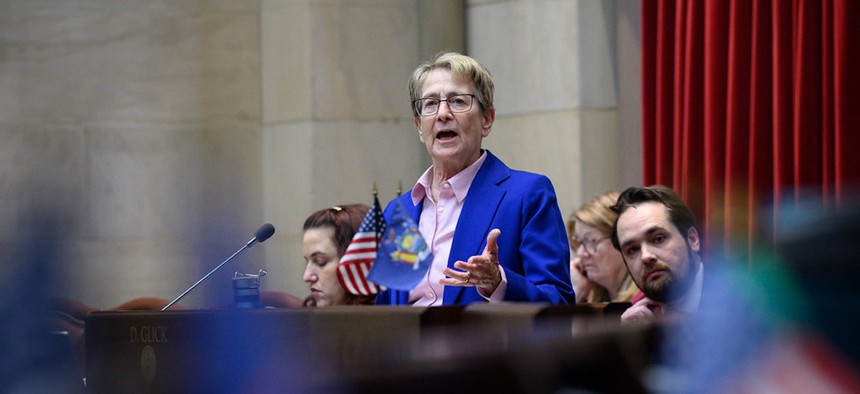

The future of New York’s Packaging Reduction and Recycling Infrastructure Act (PRRIA) is uncertain after Assembly Member Deborah Glick announced she will retire at the end of 2026. According to a report by City & State New York, business groups believe her departure could reopen negotiations on one of the state’s most debated environmental bills. Although PRRIA focuses on environmental policy, its journey through the Legislature offers important lessons for candidates preparing for NYC elections.
What Happened
Assembly Member Deborah Glick has sponsored PRRIA for several years. She plans to leave office at the end of this year.
The New York Legislature ended its 2026 session without passing the bill. This happened even though the State Senate approved it for the second year in a row.
Business organizations believe lawmakers may revisit the proposal next year. They also expect new negotiations after Glick leaves office.
Assembly leaders have not announced who will sponsor the bill next. They have also not selected the next chair of the Environmental Conservation Committee.
What Is PRRIA?
The Packaging Reduction and Recycling Infrastructure Act aims to reduce packaging waste across New York.
The bill would:
- Cut single-use plastic packaging by 30% over 12 years.
- Require businesses with at least $5 million in annual revenue to join an extended producer responsibility (EPR) program.
- Shift more waste management costs from local governments to packaging producers.
- Increase corporate responsibility for recycling and waste disposal.
Supporters say the bill would reduce waste and improve New York’s recycling system.
Opponents argue some requirements would be expensive and difficult for manufacturers and retailers to meet.
The Main Area of Disagreement
The biggest debate centers on the bill’s source reduction requirement.
The proposal would require companies to reduce packaging by 30%. Earlier versions of the bill proposed a 50% reduction before lawmakers lowered the target.
Business groups argue that even a 30% reduction would be difficult for many industries.
According to City & State New York, representatives from the Business Council of New York State said negotiations did not remove the source reduction requirement. Industry representatives also described Glick as unwilling to compromise on that provision.
Why Glick’s Retirement Matters
Many business groups believe Glick’s retirement creates a new opportunity to negotiate changes.
They hope the next Assembly sponsor will be more open to modifying the bill.
Environmental advocates disagree. They argue many lawmakers still strongly support the bill’s main goals.
Assembly Speaker Carl Heastie will decide who sponsors the legislation next. That decision could shape the bill’s future.
Why This Matters for NYC Candidates
Although PRRIA is not an election bill, it shows how leadership changes can affect legislation.
Candidates running in NYC elections should understand that committee chairs and bill sponsors often influence whether legislation moves forward.
The debate offers several lessons for first-time candidates:
- Major legislation often takes several years to pass.
- Leadership changes can create new opportunities for compromise.
- Businesses, advocacy groups, and residents all influence the legislative process.
- Building relationships with different stakeholders remains important after Election Day.
Candidates who want to understand how technology supports modern campaigns can read Artificial Intelligence Is Changing Political Campaigns. The article explains how campaigns use AI for planning, voter outreach, and communication.
Leadership also shapes political strategy. Our analysis of Kathy Hochul’s Albany endorsements shows how endorsements and legislative relationships can influence statewide politics.
Campaign and Governance Lessons
The PRRIA debate provides several useful lessons for future candidates.
Legislative Sponsors Matter
Bill sponsors help shape negotiations and policy details. A new sponsor can change the direction of important legislation.
Stakeholder Engagement Continues
Business groups and advocacy organizations continue working with lawmakers after each legislative session ends. Their efforts often influence future versions of a bill.
Major Policy Takes Time
Large policy proposals rarely pass quickly. They often require years of negotiation, revisions, and coalition building.
Successful elected officials understand that policymaking depends on patience, collaboration, and ongoing communication.
What Happens Next
Lawmakers are expected to consider PRRIA again during a future legislative session.
Before that happens, Assembly leadership must choose a new sponsor and appoint a new chair for the Environmental Conservation Committee.
Business organizations and environmental groups are expected to continue negotiating possible changes. The source reduction requirement will likely remain the biggest point of debate.
Conclusion
Deborah Glick’s retirement adds uncertainty to one of New York’s most closely watched environmental bills. Although PRRIA did not pass in 2026, new leadership could change how lawmakers approach the proposal next year.
For candidates preparing for NYC elections, the debate highlights an important lesson. Elections determine not only who serves in office but also who shapes future legislation. Understanding leadership, stakeholder engagement, and the legislative process can help candidates become more effective public officials.
PRRIA is a proposed New York bill that would reduce packaging waste, establish extended producer responsibility requirements, and require certain businesses to reduce packaging over time.
As the Assembly’s longtime sponsor of the legislation, Glick’s retirement may lead to new leadership, renewed negotiations, and potential amendments before lawmakers consider the bill again.