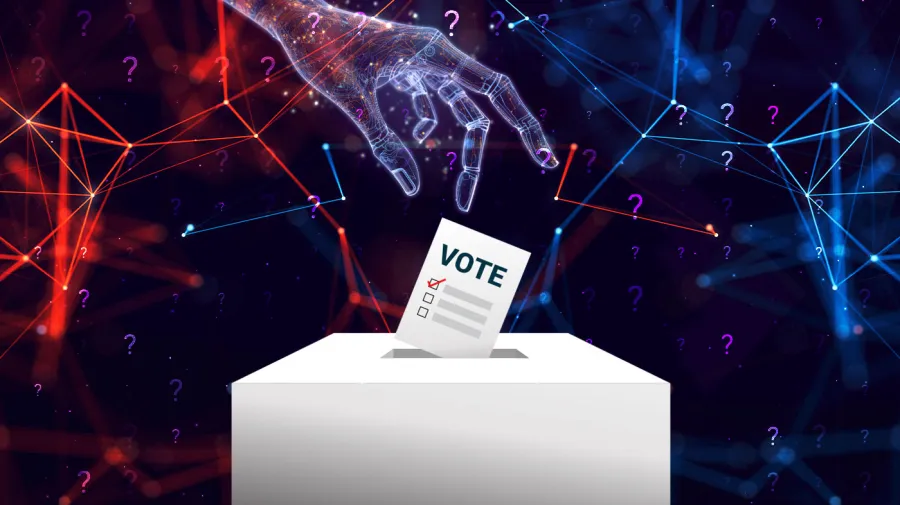

Artificial intelligence has become an unexpected talking point in the 2026 NYC primary elections, with candidates across several congressional districts openly discussing how they use tools such as ChatGPT and Claude. According to a report by City & State New York, questions about AI usage have become a recurring feature of debate stages in New York’s 7th, 10th, and 12th Congressional District races.
What was once considered politically risky has quickly become part of everyday campaign conversations, reflecting the growing influence of AI in politics, communications, and voter engagement.
What Happened
During multiple congressional debates this primary season, moderators asked candidates a new question that would have been unusual just a year ago:
How are you using artificial intelligence?
Candidates were asked when they last used an AI chatbot, which platform they used, and what they used it for.
The question appeared in debates across several congressional districts, suggesting that AI is becoming a mainstream issue in NYC elections rather than a niche technology topic.
Candidates Share Their AI Habits
New York’s 7th Congressional District
Candidates offered very different responses when discussing AI.
Julie Won said she frequently uses AI tools and recently used one to summarize notes while preparing for a debate.
Claire Valdez stated that she does not intentionally use AI and prefers more traditional methods of research and preparation.
Antonio Reynoso shared that he used Claude to help organize a guest list for a personal event.
New York’s 10th Congressional District
Representative Dan Goldman said he uses AI frequently, although he could not recall the last specific use.
Brad Lander joked that he had used AI to review one of Goldman’s votes.
New York’s 12th Congressional District
The discussion around AI has been especially prominent in this race due to outside political spending linked to technology industry interests.
Candidates including Alex Bores, Micah Lasher, George Conway, Nina Schwalbe, and Jack Schlossberg all discussed their use of AI tools during debate appearances.
Several candidates reported using Claude for debate preparation, research, and fact gathering.
Others used the question as an opportunity to draw distinctions between themselves and their opponents.
Why AI Has Become a Campaign Issue
Only a year ago, AI use by political campaigns often generated controversy.
Today, many candidates openly acknowledge using AI platforms as part of their daily workflow.
Political observers note that the conversation has shifted from whether candidates use AI to how they use it.
The debate is increasingly focused on questions such as:
- Is AI being used for research or decision making?
- Does AI improve efficiency or replace independent thinking?
- How should campaigns disclose AI generated content?
- What role should AI play in political communication?
These questions are becoming more relevant as AI tools continue to evolve.
Campaign Impact and Election Strategy
The emergence of AI as a debate topic reflects broader changes in campaign operations.
Modern campaigns increasingly rely on technology for:
- Research and policy analysis
- Voter data interpretation
- Message testing
- Digital outreach
- Content development
- Volunteer coordination
While candidates did not discuss all of these uses during debates, the conversation signals that technology literacy may become an increasingly important issue for voters evaluating candidates.
Why This Matters for Future NYC Candidates
Anyone planning to run for office in New York City can learn several lessons from the growing role of AI in campaigns.
Technology Literacy Is Becoming Important
Candidates are increasingly expected to understand emerging technologies and their impact on government, business, education, and everyday life.
Voters may view technology competence as part of a candidate’s overall readiness for office.
Campaign Messaging Must Adapt
As AI becomes more common, campaigns will need clear policies regarding transparency, authenticity, and responsible use.
Candidates who can explain how technology supports their work without replacing human judgment may be better positioned to earn voter trust.
Data and Voter Targeting Continue to Evolve
Campaigns already use data to identify supporters, prioritize outreach, and improve communication strategies.
AI tools may further enhance these capabilities, making voter targeting and district strategy even more sophisticated in future elections.
Campaign Finance and Regulation Questions Remain
As technology companies become more involved in politics, questions about campaign finance, independent expenditures, and transparency may become increasingly important.
Candidates should understand both the opportunities and regulatory considerations associated with emerging technologies.
What Happens Next
The June 2026 primary elections will provide an early look at how voters respond to candidates who openly embrace artificial intelligence versus those who remain more skeptical.
As AI becomes integrated into daily life, campaign operations, and government functions, the issue is likely to remain part of future NYC elections.
Conclusion
The growing presence of AI in congressional debates reflects a larger transformation occurring across politics and society. What began as a niche technology discussion has become part of mainstream campaign conversations. For future candidates, the lesson is clear: understanding technology, communicating transparently, and balancing innovation with accountability will be increasingly important components of successful campaigns in New York City.
Many candidates reported using tools such as ChatGPT and Claude for research, debate preparation, note summarization, and fact gathering.
AI is increasingly influencing campaign operations, voter communication, and public policy discussions, making it relevant to candidates and voters alike.