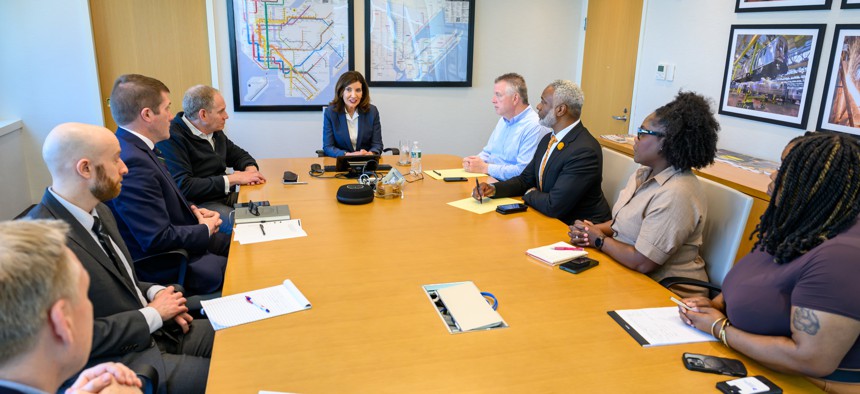

Labor union endorsements are once again shaping the political landscape ahead of the 2026 New York gubernatorial election after the Transport Workers Union (TWU) urged the New York State AFL-CIO not to endorse Governor Kathy Hochul. According to a report by City & State New York, the request came while the union remains engaged in contract negotiations with the Metropolitan Transportation Authority (MTA). Despite the opposition, the New York State AFL-CIO later voted to endorse Hochul’s reelection campaign. The episode highlights the significant role organized labor continues to play in NYC elections and statewide campaigns.
What Happened
Transport Workers Union International President John Samuelsen sent a letter to New York State AFL-CIO President Mario Cilento urging the statewide labor federation to withhold its endorsement of Governor Kathy Hochul.
Samuelsen argued that endorsing the governor during ongoing labor disputes would undermine workers’ confidence in organized labor. His letter cited several issues, including:
- Contract negotiations between the TWU and the MTA.
- The state’s handling of recent labor disputes involving correction officers.
- The Long Island Rail Road labor dispute.
- Hochul’s record on union-backed legislation.
Despite the appeal, the New York State AFL-CIO Executive Council voted later that day to endorse Governor Hochul for reelection.
Why Labor Endorsements Matter
Labor unions remain among the most influential political organizations in New York elections.
An endorsement from a major labor organization can provide campaigns with:
- Volunteer support.
- Voter outreach operations.
- Financial contributions through political action committees where permitted by law.
- Public credibility among union households.
- Access to established community networks.
While endorsements do not determine election outcomes on their own, they often become important signals for voters and political organizations.
Different Views Within Organized Labor
The disagreement also illustrates that organized labor is not always politically unified.
While TWU publicly opposed endorsing Governor Hochul, several other major unions announced support for her campaign, including:
- DC37
- 32BJ SEIU
- CSEA
- NYSUT
- PSC-CUNY
- UNITE HERE Local 100
- RWDSU
- IUOE Local 825
- CWA District 1
- LiUNA
Governor Hochul’s campaign highlighted this broad coalition of labor endorsements, arguing that her administration has consistently supported workers through wage increases, labor protections, and union job creation.
Why This Matters for NYC Candidates
For candidates planning to run for office in New York City, labor relationships can become an important component of campaign strategy.
Whether seeking City Council, borough-wide, or statewide office, candidates often engage with labor organizations to:
- Discuss policy priorities.
- Build coalitions.
- Expand volunteer networks.
- Reach organized voting constituencies.
At the same time, this example demonstrates that endorsements are not automatic. Labor organizations may evaluate candidates differently based on contract negotiations, legislative records, and issue priorities.
Candidates should understand that coalition building requires sustained engagement with community organizations, labor groups, advocacy organizations, and neighborhood stakeholders throughout a campaign.
To better understand recent coalition dynamics in New York politics, read How the Mamdani Coalition Is Reshaping NYC Democratic Primaries.
You can also explore broader voting trends in NYC Primary Voter Turnout 2026.
Campaign Strategy Lessons
The dispute offers several important lessons for first-time candidates:
- Political endorsements often reflect policy priorities as well as personal relationships.
- Different organizations within the same broader coalition may support different strategies.
- Campaigns benefit from maintaining consistent communication with stakeholder groups throughout the election cycle.
- Building broad coalitions typically requires balancing the interests of multiple constituencies.
Candidates who understand how endorsements are earned can better prepare for conversations with labor organizations, advocacy groups, and community leaders.
What Happens Next
Although the New York State AFL-CIO ultimately endorsed Governor Hochul, the disagreement with the TWU illustrates that labor issues are likely to remain an important part of the 2026 gubernatorial campaign.
For prospective candidates in New York City, the broader lesson is that successful campaigns rely not only on policy proposals but also on building durable relationships with organizations that play influential roles in civic and political life.
The Transport Workers Union cited ongoing labor disputes, contract negotiations with the MTA, and disagreements over the governor’s labor record in urging the AFL-CIO not to endorse her.
Labor unions can provide volunteers, voter outreach, organizational support, and political credibility, making endorsements valuable components of many campaigns.