
Voter turnout in Queens primary elections declined from the record-breaking participation seen during last year’s mayoral race, but Mayor Zohran Mamdani’s political influence remained evident across several of the borough’s most competitive contests. According to a report by Queens Eagle, many voters cited Mamdani’s endorsements and the momentum of his political movement as major factors shaping their choices in congressional and state legislative primaries. The results highlight how endorsements, grassroots organizing, and voter enthusiasm continue to influence NYC elections.
What Happened in the Queens Primaries?
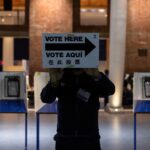
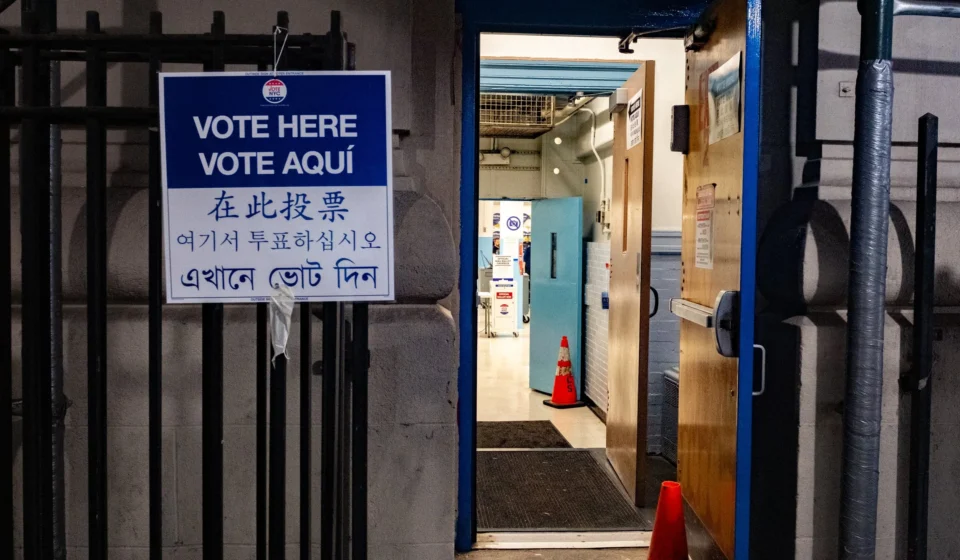
Election Day turnout in Queens returned closer to historical norms following the exceptionally high participation seen during the 2025 mayoral election.
By 3 p.m., approximately 63,000 Queens voters had cast ballots, including roughly 33,000 early votes recorded during the nine-day early voting period.
By comparison, nearly 228,000 voters participated in Queens during the highly competitive 2025 Democratic mayoral primary.
Although overall turnout declined, many voters interviewed at polling locations said the enthusiasm generated by Mayor Mamdani’s campaign continued to influence local elections.
Mamdani’s Endorsements Shaped Several Competitive Races
The mayor’s endorsements were especially visible in New York’s 7th Congressional District, where Assembly Member Claire Valdez competed against Brooklyn Borough President Antonio Reynoso, City Council Member Julie Won, and attorney Vichal Kumar.
Several voters interviewed by the Queens Eagle said Mamdani’s endorsement influenced their decision to support Valdez.
The article also highlighted other races where candidates aligned with progressive organizations such as the Democratic Socialists of America (DSA) benefited from increased grassroots enthusiasm.
Although Mamdani did not endorse every progressive candidate, many voters associated broader progressive campaigns with the coalition that emerged during his mayoral campaign.
Several Key Queens Races Drew Significant Attention
Beyond the congressional contest, multiple state legislative races generated competitive campaigns throughout Queens.
Assembly District 38 featured a closely watched contest between incumbent Jenifer Rajkumar and challenger David Orkin, who was backed by the DSA and Representative Alexandria Ocasio-Cortez.
In State Senate District 13, incumbent Jessica Ramos faced Assembly Member Jessica González-Rojas and former State Senator Hiram Monserrate in one of the borough’s most competitive legislative races.
The campaign attracted substantial fundraising and independent spending, including a reported $850,000 Super PAC contribution supporting González-Rojas during the final days of the campaign.
These races demonstrated how endorsements, fundraising, and grassroots organizing can shape competitive district elections.
Voter Perspectives Reflected Changing Political Priorities
Interviews conducted throughout Queens revealed that many voters were motivated by more than party affiliation alone.
Some voters cited Mamdani’s endorsements when selecting candidates, while others emphasized local representation, community engagement, or a desire for political change.
Several voters also discussed issues including affordable housing, labor rights, neighborhood development, and government accountability.
The diversity of viewpoints reflected the importance of district-level issues and personal candidate relationships in local elections.
Why This Matters for NYC Candidates
The Queens primaries offer several practical lessons for anyone considering a campaign for public office.
Endorsements Can Influence Voter Decisions
Support from respected political leaders or community organizations can increase candidate visibility, particularly in competitive primary elections. However, endorsements work best when paired with strong grassroots organizing.
District-Level Campaigning Remains Essential
Queens contains neighborhoods with different political priorities and demographic profiles. Successful candidates tailor campaign messages to the communities they seek to represent instead of relying solely on citywide narratives.
Voter Contact Still Makes a Difference
Many voters referenced direct interactions with campaigns through door knocking, literature distribution, and neighborhood events. Personal voter outreach continues to be one of the most effective campaign strategies in NYC elections.
Candidates can better understand these changing political dynamics by reading How Mamdani Is Influencing NYC Congressional Primaries.
For a broader overview of this election cycle, see Queens Primary Elections 2026 Candidates Guide.
What Happens Next?
Following the completion of the primary elections, winning candidates will prepare for the general election while campaigns evaluate turnout data, voter behavior, and district-level performance.
Although turnout declined from the unprecedented levels recorded during the 2025 mayoral race, the Queens primaries demonstrated that grassroots organizing, strategic endorsements, and direct voter engagement remain powerful influences in New York City politics.
For future candidates, the election reinforces an important lesson: successful campaigns are built not only on endorsements or fundraising but also on consistent community engagement and a strong understanding of local district priorities.
Turnout returned closer to historical levels after the unusually high participation during the 2025 mayoral primary, which attracted significantly more voters across New York City.
Many voters cited Mamdani’s endorsements and the momentum of his political movement as reasons for supporting several progressive candidates in congressional and state legislative races.