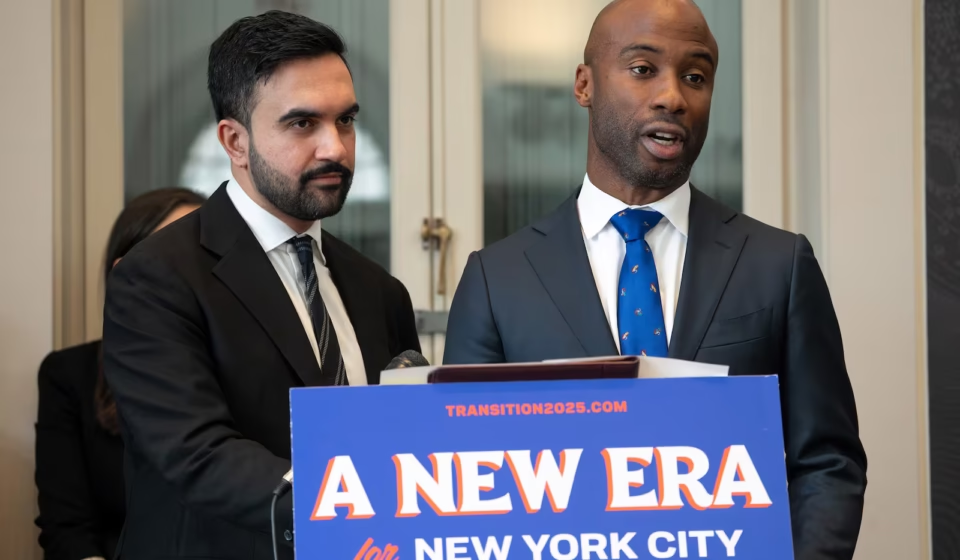

Mayor Zohran Mamdani’s first six months in office have been defined by an emphasis on affordability initiatives, including childcare, housing, and transportation, while K-12 public education has received comparatively little public attention. According to a report by Chalkbeat New York, the administration has issued relatively few announcements focused on New York City’s public school system despite overseeing the nation’s largest school district. For anyone interested in NYC elections, the early months of the administration offer insight into how campaign priorities can shape governing once a candidate takes office.
What Happened
During his campaign, Mayor Mamdani centered his platform on affordability, highlighting policies such as expanding childcare, improving transportation, and addressing housing costs.
Six months into his administration, those priorities have largely remained the focus. Chalkbeat’s review found that only a small number of mayoral press releases have addressed K-12 education, with only one announcing a new classroom policy. That initiative expanded an existing literacy and math curriculum overhaul that began under the previous administration rather than introducing a completely new education program.
Meanwhile, Schools Chancellor Kamar Samuels has introduced several education initiatives, though the administration has yet to unveil a broader long-term vision for the city’s public schools.
Education Takes a Back Seat to Core Campaign Priorities
Observers interviewed by Chalkbeat offered differing interpretations of the administration’s approach.
Some education advocates expressed concern that public schools have not become a more visible policy priority, noting that New York City’s education system remains one of the mayor’s largest responsibilities.
Others suggested the administration is intentionally moving cautiously by gathering community feedback before pursuing major reforms. They also argued that delivering on popular affordability promises, particularly universal childcare, could produce immediate benefits for families while building political support for future education initiatives.
City Hall disputed the idea that education has been neglected, stating that meaningful policy development is not measured solely by press releases and emphasizing ongoing listening sessions with educators and communities before releasing a broader education agenda.
Campaign Promises Versus Governing Reality
The first six months also illustrate how governing often differs from campaigning.
During the mayoral campaign, Mamdani supported ending mayoral control of New York City schools and eliminating kindergarten admissions to the city’s gifted and talented program.
Before taking office, however, he reversed his position on mayoral control. His administration also sought additional time to comply with New York State’s class size requirements rather than implementing the original campaign timeline, citing budget considerations.
These shifts demonstrate a common challenge for elected officials: balancing campaign commitments with legal, fiscal, and operational realities after assuming office.
Why This Matters for NYC Candidates
For first-time candidates considering a run for office, the transition from campaigning to governing is one of the most important lessons in modern politics.
Campaigns often focus on a handful of signature issues that resonate most with voters. Once elected, however, officials must oversee dozens of complex policy areas, many of which require balancing competing priorities, budget constraints, and stakeholder interests.
Candidates preparing for future NYC elections should recognize that voters frequently evaluate not only campaign promises but also how effectively elected officials prioritize competing responsibilities after taking office.
Understanding how policy priorities evolve after Election Day can also help candidates develop more realistic governing agendas and communicate expectations clearly with voters.
For additional insight into how campaign messaging influenced the 2026 political landscape, read How the Mamdani Coalition Is Reshaping NYC Democratic Primaries.
Candidates can also better understand voter behavior by reviewing NYC Primary Voter Turnout 2026.
Campaign Strategy Lessons
This case highlights several important campaign strategy principles:
- Signature issues often continue to dominate an administration’s early agenda.
- Political capital is limited, requiring leaders to prioritize certain promises before others.
- Community engagement and stakeholder input can delay major policy announcements while long-term plans are developed.
- Governing requires adapting campaign proposals to legal, financial, and administrative realities.
For candidates planning to run for office in New York City, these lessons are as important as understanding ballot access, campaign finance, district strategy, and voter outreach.
What Happens Next
Mayor Mamdani’s administration has indicated that a broader vision for New York City’s public schools will be announced following community listening sessions and additional public engagement.
Whether education becomes a larger focus during the remainder of his first term will likely shape public perceptions of the administration and influence future political debates heading into upcoming NYC elections.
For prospective candidates, the first six months reinforce an enduring campaign lesson: winning an election depends on setting priorities, but governing requires demonstrating how those priorities translate into measurable public policy.
His administration has primarily emphasized affordability initiatives, including childcare, housing, and transportation, while a broader K-12 education agenda has yet to be announced.
It demonstrates how campaign priorities evolve into governing decisions and highlights the importance of balancing voter expectations, budgets, and long-term policy goals.